CURATION LABS · COORDINATION AT CIVILIZATION SCALE · PART ONE OF TWO
No one who writes Wikipedia is reliable. The system is.
How a few hundred thousand strangers maintain the reference
layer of a species — and why every civilization before them had to solve
the same four problems.
SPEAKERRemy
AUDIENCECuration Labs
RUNTIME~10 min
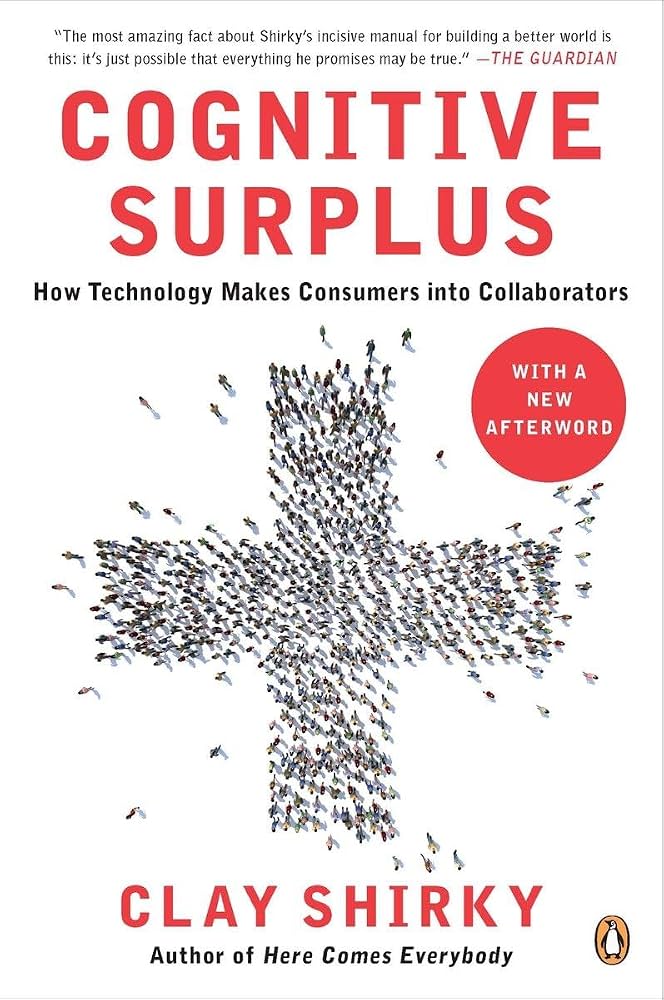
SOURCE — C. SHIRKY, COGNITIVE SURPLUS (2010)
THE SETUP
Wikipedia has no editors, no owners, and nobody checking credentials.
Articles
7,229,007
Active editors
252,948
Edits since 2001
1,365,992,087
Page views
4,500 / second
Hours of human thought
≈ 100,000,000
People in charge
0
EN.WIKIPEDIA.ORG · ENGLISH WIKIPEDIA · 1 JUNE 2026
Clay Shirky · Cognitive Surplus · 2010
Where the last number comes from — and what the internet actually changed.
WHAT YOU LEAVE WITH
Three questions you will be able to answer by the end of this talk.
01
Why didn't it collapse?
02
What do a currency, a courtroom and a revision history
have in common?
03
How can a system be perfectly coordinated
and perfectly wrong?
You will leave with
a four-part test you can run on any organization — including your own.
SOURCE — Y. N. HARARI, SAPIENS (2011)
MECHANISM ONE · TRUST
Wikipedia never asks you to trust a person — only to check a source.
EDITOR A
EDITOR B
PERSONAL TRUST
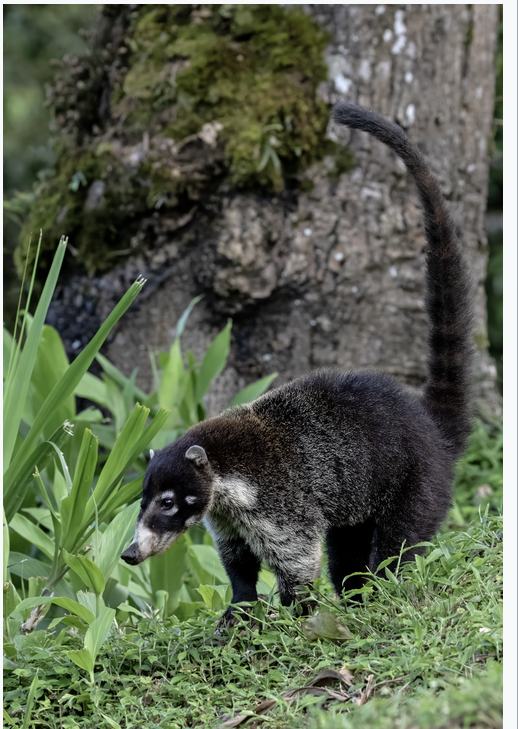
COATI — ARTICLE
A small omnivorous mammal native to South America.
[1]
1
PUBLISHED SOURCE
Anyone can go and check it.
2
PERENNIAL SOURCES
Which outlets count — argued in public, revisable.
Trust the check, not the person.
SOURCE — Y. N. HARARI, NEXUS (2024)
MECHANISM TWO · MEMORY
Wikipedia keeps every edit ever made, so its memory is not in anyone’s head.
COATI — ARTICLE
A small omnivorous mammal native to South America.
[1]
PUBLISHED SOURCE
Anyone can go and check it.
EVERY EDIT, EVERY AUTHOR, EVERY DIFF — KEPT
The article carries its own history.
SOURCE — Y. N. HARARI, NEXUS (2024)
MECHANISM THREE · DECISIONS
Wikipedia has no manager, so disagreement is settled in public, on the record.
COATI — ARTICLE
A small omnivorous mammal native to South America.
[1]
TALK PAGE
ALICEThe source doesn’t say “omnivorous”.
BJORNIt does — p. 114. But “native to” is wrong.
ALICEAgreed. Propose “found across”.
2
CONSENSUS
You can read the argument that produced the sentence.
SOURCE — Y. N. HARARI, NEXUS (2024)
MECHANISM FOUR · CORRECTION
Wikipedia publishes a register of every time it fooled the world.
Wikipedia:List of citogenesis incidentsA public register of every time this has happened.
2008 · the article
“also known as the Brazilian aardvark”
the press
Telegraph · Daily Mail · a university book
an editor
adds a citation to the newspaper
the article, now sourced
the claim is its own evidence
1
2
3
4
6 YEARS
The coati Not, in fact, a Brazilian aardvark.
1a journalist reads it
2it is now in print
3cited
4the claim is its own source
SOURCE — Y. N. HARARI SAPIENS (2011) · NEXUS (2024)
THE FRAMEWORK
These four answers are not Wikipedia’s. Every large society has needed them.
WikipediaEvery large society
Trust
the citation
money · law
Memory
revision history
writing · records
Decisions
talk page · consensus
courts · parliaments
Correction
revert · arbitration
appeal · peer review · a free press
Real because all of us act as though it is.
WHERE THIS COMES FROM
Yuval Noah Harari asked these questions first — across two books.
SapiensYuval Noah Harari · 2011How can millions of strangers cooperate at all?
NexusYuval Noah Harari · 2024Once they can — how are those networks run, and kept from
becoming confidently wrong?
Wikipedia had to
answer both. In public. In twenty-five years.
SOURCE — Y. N. HARARI, NEXUS (2024)
WHAT THE SYSTEM BUYS
The record is how billions of people act on what only a few of them saw.
An ice sheetAntarctica
A virusToo small to see
A tax rollTwelfth century
1
2
3
The recordeverything the rest of us have to go on
EVERYONE ELSE
1someone went
2someone looked
3someone read it
WHY THIS EXAMPLE
Wikipedia is the same machinery as money and law — with the source code visible.
Money · law · courts · the free press≈ 5,000 years
Built mostly by accident. You cannot read the
revision history of the legal system.
Wikipedia25 years
← drawn to scale. That is 0.5% of the track above.
Built deliberately. Every edit, every argument,
every reversal — public.
It is the only one of
them you can read the source of.
THE TEST I PROMISED YOU
Four questions you can ask of any organization you work in.
Trust
What can someone check, so they don't have to trust anyone?
Memory
What does the group know that isn't in someone's head?
Decisions
Where does disagreement go?
Correction
Who is allowed to say the record is wrong?
Most organizations
are strong on three and have never thought about the fourth.
SOURCE — Y. N. HARARI, NEXUS (2024)
NEXT WEEK
Everything you saw today was built by people. Next week: agents.
WikipediaAgents
Trust
the citation
Memory
revision history
Decisions
talk page · consensus
Correction
revert · arbitration
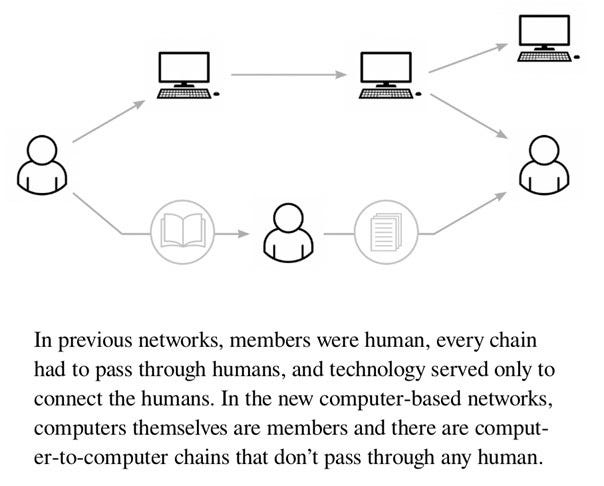
Yuval Noah Harari · Nexus · 2024
His diagram, not ours. Every chain you have seen today ran through a person.
NEXT WEEK · A GLIMPSE
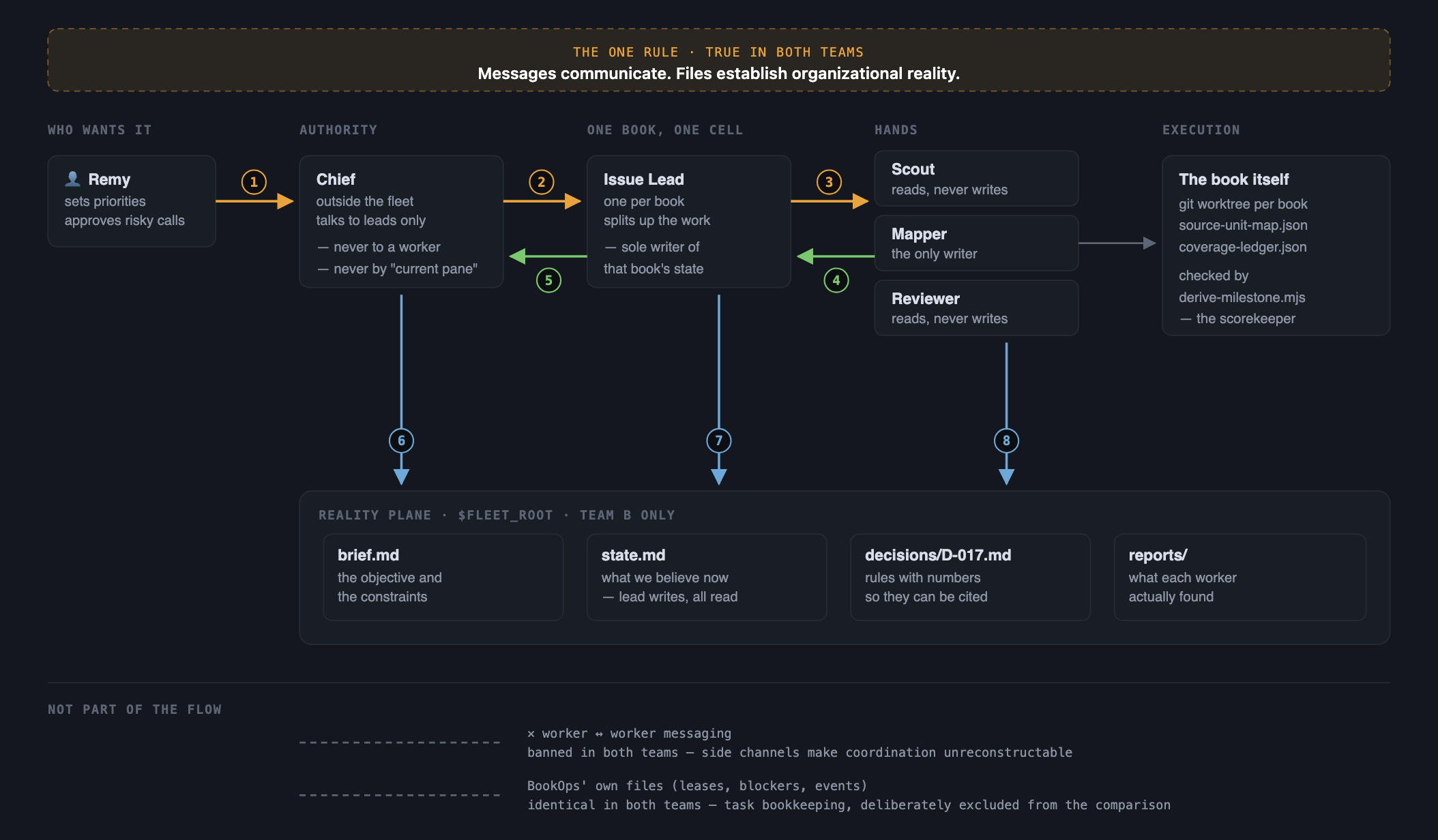
We wired a fleet of agents the same way — and one question stayed open.
THE BOOKOPS EXPERIMENT · TWO TEAMS, ONE JOB
Trust
Decisions written with numbers, so they can be cited.
✓
Memory
A shared reality plane. Messages communicate; files establish
what is real.
✓
Decisions
One writer per unit of work. Nobody else may touch it.
✓
Correction
A reviewer who reads and never writes. That is checking the
work — not the standing to overturn it.